Teaching the Heart of Truth
A Conversation with Bishop Earl Boyea
A Conversation with Bishop Earl Boyea
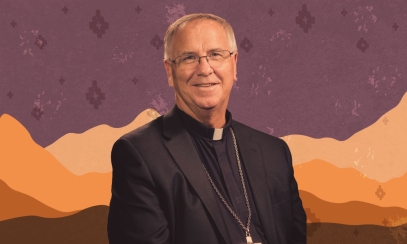
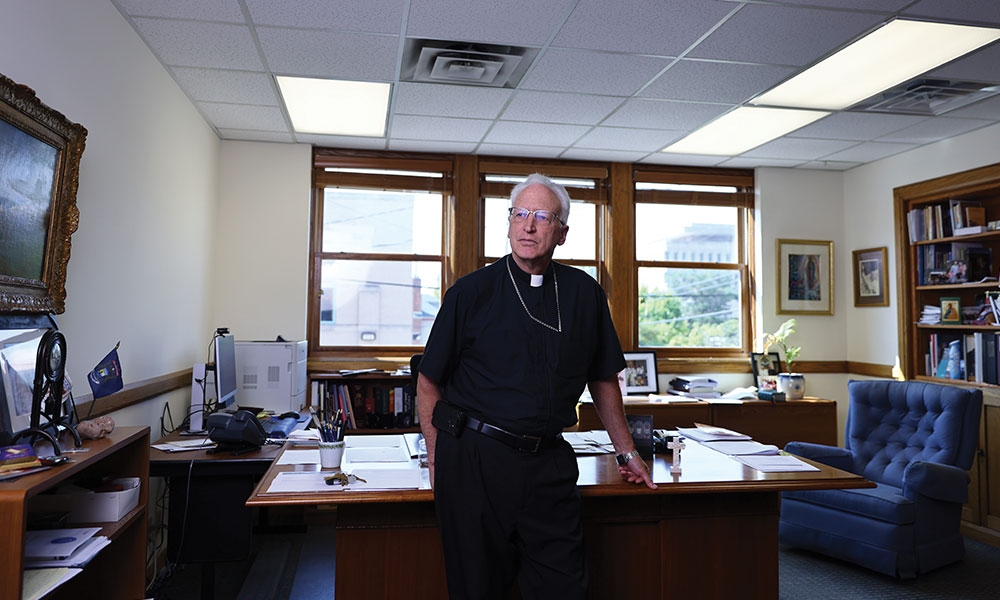
A noted and accomplished academic, he holds a Bachelor’s in History from Sacred Heart Seminary High School and College, a Bachelor’s in Sacred Theology from Pontifical North American College and Pontifical Gregorian University, a Licentiate in Sacred Theology from Gregorian University, a Master’s in American History from Wayne State University, and a Ph.D. in Church History from the Catholic University of America in Washington, D.C. In addition to various parish assignments throughout his priesthood, from 1987 to 2000, he was a professor and Dean of Studies at Sacred Heart Major Seminary in Detroit, and from 2001 to 2002, was Rector-President and a professor at the Pontifical College Josephinum in Columbus, Ohio.
A noted and accomplished academic, he holds a Bachelor’s in History from Sacred Heart Seminary High School and College, a Bachelor’s in Sacred Theology from Pontifical North American College and Pontifical Gregorian University, a Licentiate in Sacred Theology from Gregorian University, a Master’s in American History from Wayne State University, and a Ph.D. in Church History from the Catholic University of America in Washington, D.C. In addition to various parish assignments throughout his priesthood, from 1987 to 2000, he was a professor and Dean of Studies at Sacred Heart Major Seminary in Detroit, and from 2001 to 2002, was Rector-President and a professor at the Pontifical College Josephinum in Columbus, Ohio.
On July 22, 2002, then-Msgr. Boyea was appointed Auxiliary Bishop of Detroit and Titular Bishop of Siccenna by Pope John Paul II. He received his episcopal consecration on September 13, 2002, from Cardinal Adam Maida. During his tenure as an auxiliary, Bishop Boyea served as Regional Bishop for the South Region (2002-03) and for the Northeast Region (2003-08) of the archdiocese.
Pope Benedict XVI named him Bishop of Lansing on February 27, 2008 and he was formally installed as Lansing’s ordinary on April 29, 2008. His 2012 pastoral letter, “Go and Announce the Gospel of the Lord,” addressed the urgent need for evangelization, calling the lay faithful to go forth as witnesses for Christ and welcome back our brothers and sisters who are no longer active in our parish communities. Among his pastoral priorities has been the promotion of Catholic education and vocations to the priesthood and religious life, and support for Catholic Charities and prison ministries.
As is customary, Bishop Boyea tendered his resignation to the Holy Father on his 75th birthday, April 10, 2026. At press time, he awaited news from Pope Leo XIV of his successor. On the eve of this monumental transition for Bishop Boyea, Content Evangelist invited him to reflect on his role as a teacher of the faith…
CE: Teaching has been a big part of your priesthood. Talk a little bit about your life as an academic.
Bishop Boyea: Teaching has been a big part of my life as a priest. I taught seminarians and lay people for 13 years and I always enjoyed the give-and-take of the classroom — the response of students and the encounter with new ideas. And that’s a reflection of how I feel about learning new things. When I’m reading or listening to something and a new insight strikes me, I love that moment, and I try to give that same kind of encounter to others.
One of my favorite electives at the seminary was a course on the Book of Revelation. I would have each student read three different commentaries, and then we’d go chapter by chapter through the book, with students sharing what they had read. It was a wonderful way to engage the text — not just trading opinions, but integrating sources that often disagreed with one another and asking: What’s the verdict here?
CE: For the past few years, you’ve undertaken several series of emails and videos for subscribers to educate Catholics about our faith. It’s almost like you’re creating ongoing Catechism courses for everyday Catholics. What’s your approach to teaching the faithful in this way?
Bishop Boyea: I don’t think of what I’m doing as a course. It’s more of an introduction — a preamble to get things started. My ideal hope is that someone would then pursue the topic further, maybe through some reading or additional inquiry. I don’t know how many people actually take that next step, but the aim is simply to give a taste. That’s why the videos are always brief — a few minutes, not so in-depth that you get lost, just enough to spark something.
I particularly love talking about history and Scripture. Those have always been my fortes, and being able to speak about them gives me real energy. I’ve heard from a number of people that they’ve enjoyed it, which is reason enough to keep going.
CE: Your emails arrive every Friday at exactly the same time and the regularity of the weekly release seems to be part of what makes it work — people know to expect it. Was that intentional?
Bishop Boyea: It is. A regular approach, even just a few minutes every Friday morning, does create something people can depend on. My aim has always been to reach the people of the Diocese of Lansing — that’s my total purpose. I feel an obligation to them, not only to govern and provide the sacraments, but also to teach. That’s the third leg of what we’re supposed to do as bishops. So I’m trying to teach small things that perhaps they would not have encountered otherwise.
For example, my series on Saint Paul and the Church in Corinth. Many people know the Letters to the Corinthians — we hear them all the time at Mass — but to think about them as a whole, and to consider Paul encountering a community full of division and near chaos, gives an entirely new appreciation for what he was doing. These letters didn’t come from nowhere; they came from a very specific context.
CE: There’s a perception that Catholics don’t know their Bible. Does that frustrate you, given your background in Scripture?
Bishop Boyea: It does make me crazy, because our lectionary — the three-year Sunday cycle — actually exposes people to more Scripture than many other Christian traditions. Now, are people reading the Bible at home? That’s the question for everyone, not just Catholics.
Father Mike Schmitz has done a great job encouraging people to read Scripture in a year. My own approach is more modest: read a chapter a day. If it takes you three or four years, it takes you three or four years. Don’t be in a hurry. Right now I’m on another cycle through and I’m in the middle of the Psalms.
CE: You were an early adopter of Twitter — now X — among your brother bishops and you’ve been known to post from your prayer time — quotes from saints or Scripture, for example. What drives that?
Bishop Boyea: When something strikes me during the Office or while I’m reading a meditative book during my prayer time, it’s not just that I think it will help others — it’s that it strikes me personally. Posting it is a way to memorialize that encounter with a text, with those words, with the Lord.
CE: Who do you think is doing Catholic media well right now?
Bishop Boyea: Father Schmitz is doing remarkable work on all the major platforms. The Hallow app has been extraordinary — I understand that just after Ash Wednesday it was the top downloaded app in the country, ahead of ChatGPT and everything else. I do think these things are connected to what we’re seeing on the ground. Here in Lansing, we’re approaching a thousand people coming into the Church this Easter. That’s happening across the country.
It’s especially reaching Generation Z. They are tied into social media in a deep way, and if we can reach them — not just with content but with the full weight of evangelization, with stories and witness — I think that has a profound impact. Though for me, personally, I’m still a book person!
CE: As Bishop of Lansing, you oversee a media company in FAITH Catholic. What has it been like to lead a media company during a season of such extraordinary change and growth?
Bishop Boyea: FAITH was already here when I was appointed Bishop of Lansing, of course, and my leadership over the company has really been a matter of entrusting the work to the people in charge of it. I have a great deal of confidence in what everyone there is doing. At our meetings, I’m mostly just trying to add ideas — there’s very little I would challenge, because I think they’re doing such a fine job. And I should say clearly that I have nothing to do with individual publishing decisions. That’s entirely FAITH Catholic’s domain — they oversee all of that and work with individual dioceses.
What I have learned about publishing is that the most effective magazines use beautiful imagery and tell stories in a compelling way so that they get to the heart of things quickly. That’s what draws readers in and inspires them.
CE: Some dioceses are moving entirely to digital. Do you think print still has a place?
Bishop Boyea: Absolutely. A print piece isn’t just a tool for the person who receives it — it can reach others. If it’s sitting on a coffee table, a friend or neighbor can see it. It only takes a glance to be drawn into something.
I also think people genuinely love receiving something in the mail. Our mailboxes are largely empty now — just bills, and not even those anymore. To receive something of real substance is extraordinary in that context. Social media has become the ordinary; a well-made print piece is the extraordinary. And there’s something about being able to grace a household with that — something you can hold, return to, feel in your hands. I think that still has tremendous value for a diocese.
CE: Any final thoughts on how best to communicate to teach our Catholic faith?
Bishop Boyea: What we believe as Catholics is the heart of Truth. If we can get that out — and get it out clearly — people respond. That means the Cross too. It’s not always joyful and easy. It involves suffering for the sake of others, reparation, all the things that aren’t negative but are necessary for getting to heaven. It’s a stairway you have to climb.
But there’s a joy and a glory in it that draws people in. We have very solid content to convey. The task is just to get to the meat of it — quickly and clearly. That’s the whole game.
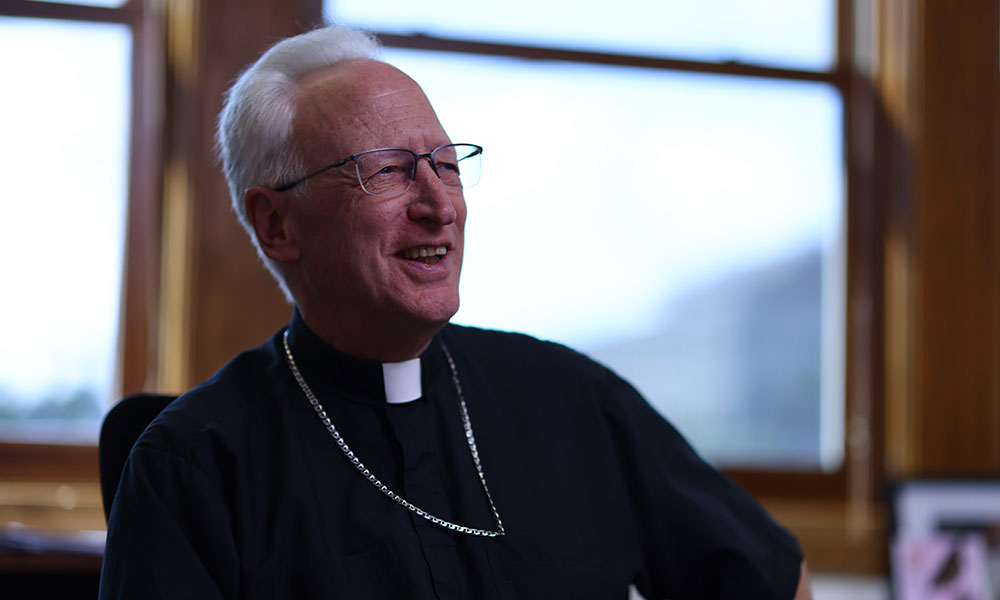
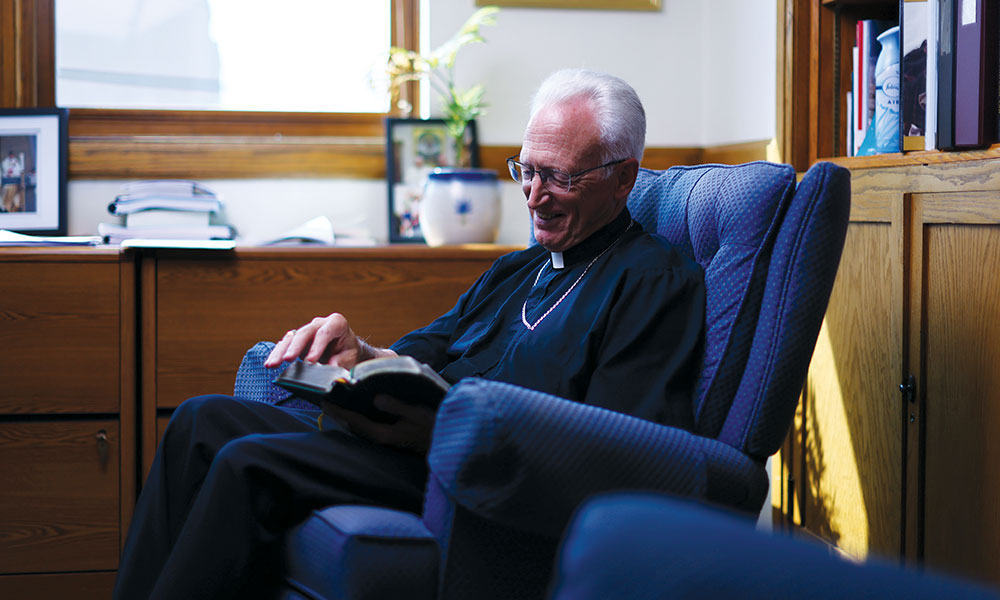
Bishop Earl A. Boyea is the fifth bishop of the Diocese of Lansing, Michigan. He was ordained to the priesthood by Bishop Joseph Imesch on May 20, 1978.