Planting seeds of faith
Given the exciting numbers that we have seen across the nation of people joining the Church this past Easter, we recently spoke with Cameron Diachun, Director of Worship and Liturgy from the Diocese of Gaylord, MI, to hear about what he’s seeing there and to get his thoughts about the role that media plays in supporting people on their journey to the faith.
Given the exciting numbers that we have seen across the nation of people joining the Church this past Easter, we recently spoke with Cameron Diachun, Director of Worship and Liturgy from the Diocese of Gaylord, MI, to hear about what he’s seeing there and to get his thoughts about the role that media plays in supporting people on their journey to the faith.
What are you seeing in the Diocese of Gaylord in terms of the number of new Catholics entering the Church through OCIA?
The Diocese of Gaylord welcomed 193 catechumens and candidates at this year’s Combined Rite of Election and Calling to Continuing Conversion. This is a 112% increase over last year’s 91 participants, God be praised! Since 2023, we have seen an average of 132 participants. This is twice our average from 2016-2022 (63 participants).
What are you hearing from parish initiation ministers about what is drawing so many to the faith?
Many are experiencing a renewed search for meaning and truth in their lives, which are inundated with negative media and the emptiness of moral relativity. They find a home in the Catholic Church, which has 2,000 years of Sacred Tradition which offers unwavering truths in a world of uncertainty. I have also heard many young people especially find comfort in the ritual consistency of the Catholic liturgy.
How is the OCIA process itself a powerful way the Church hands on faith?
The OCIA process provides an opportunity to ask the many questions that people have today and to discover the answers that are found in the Catholic faith. It also provides a ritual framework that offers real grace to those discerning baptism and the other sacraments of initiation in a time in their lives that is marked with real spiritual battles. Finally, the OCIA process models well what Pope Francis called the “ministry of accompaniment,” which enables leaders to meet inquirers wherever they are in their search for meaning and walk with them on the road to sacramental communion.
What role do you think Catholic media has had on new Catholics’ journey to the faith?
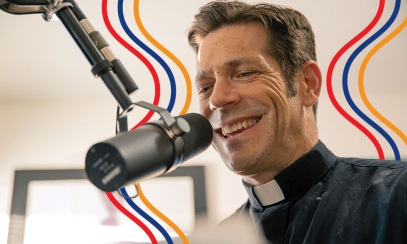
So many people are sucked into that terrible addiction to “doom scrolling.” Catholic content creators can often serve as a ray of light in this otherwise mindless habit that causes one to stop and think. These creators plant the seed through their personal witness that hopefully blossoms into a curiosity to explore more long-form Catholic content and eventually, inspire one to talk to a priest or go to Mass perhaps for the first time.
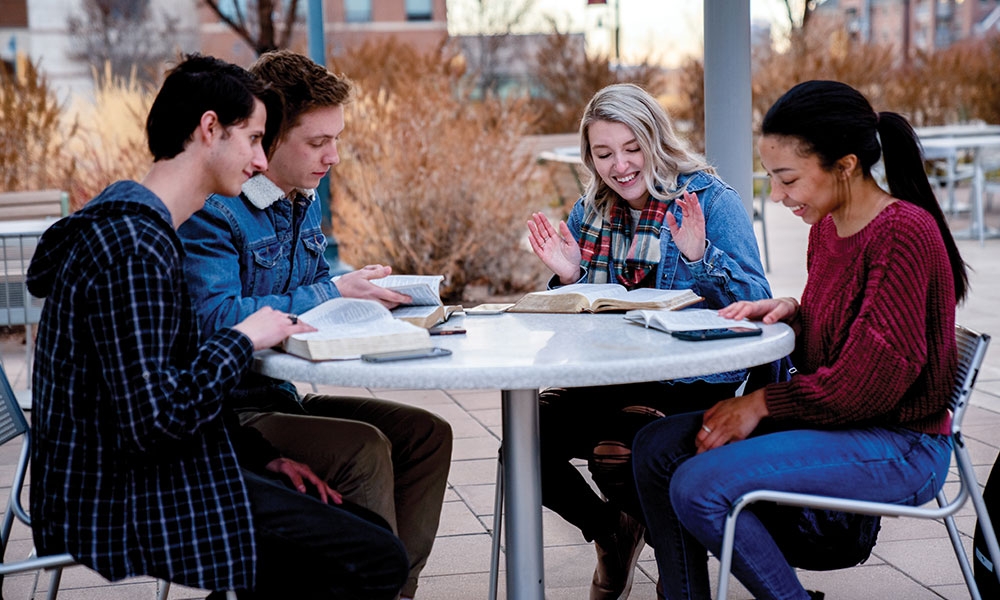
While I think that strong Catholic media serves to plant the seed in many converts’ lives, it is an essential step for the inquirer to go from consuming Catholic media in isolation to getting connected with their local Catholic community, especially through participation in the Liturgy.
How might Catholic media support a person’s OCIA journey?
The support Catholic media offers to the work of forming catechumens and candidates should be largely supplemental. That being said, it can be a great resource in connecting inquirers to the wider Church and to demonstrate the universality of our faith. It also serves as a useful tool for catechists who may not have the same public speaking skills or ability to prepare a curriculum from scratch. Importantly, Catholic media cannot replace the essential human connection that is required to accompany inquirers on their journey of faith and to introduce them to the ecclesial community. “One must not underestimate the power of the liturgy in communicating the faith and introducing people to the experience of God….It is therefore necessary to rediscover the capacities of the liturgy, but also of sacred art, to express the mysteries of the faith” (Directory for Catechesis, par. 372).
What role does Catholic media play in supporting the newly initiated in their ongoing formation?
The term neophyte literally means “newly planted.” The newly initiated need to establish deep roots of faith by integrating themselves into their local faith communities. As these roots deepen, it is the hope of every parish that the neophytes grow into strong leaders and serve as witnesses to future inquirers. Life-long formation is essential to deepen these roots. Catholic media can provide resources for theological formation and methods of evangelization that local parishes may not have the capacity to offer.
How can diocesan magazines offer support to catechumens/candidates/neophytes along the various stages of their journey?
The stories of local witnesses that are often featured in diocesan magazines can offer encouragement to catechumens and candidates that are learning what it means to be Catholic in their local context. It also provides new Catholics a sense of connectedness to the diocese as a whole, further substantiating that the Universal Church is greater than their local parish community. This connectedness to “something bigger than oneself” is often credited for drawing converts to the Catholic faith and so ought to be nurtured.
Is there anything else you would like to share about the opportunities Catholic media offers in terms of aiding efforts of Initiation ministers in handing on the faith?
As the public face of our Church — even more so than many of our bishops — it is of paramount importance that we encourage content creators to stay objective and charitable when discussing differences of opinion that exist inside the Church. It is also important that they always invite their followers to get offline, get connected to local Catholics, and participate in the Liturgy that uniquely integrates the body, mind, and soul in prayer. While seeds may be planted through online media, real faith takes root offline through relationship with God and care for fellow man.